Travelling with luggage on your bike gives Alicante a different rhythm: stop in a village, visit a pottery museum or stay inland for dinner. The appeal is connecting experiences rather than reaching an arbitrary mileage target. The province has greenways and official cycle touring proposals, but these do not form a single continuously signed route across Alicante. This guide helps you build verifiable stages, confirmed overnight stops and realistic alternatives suited to the bike you will actually ride with your luggage.
Choose the journey before choosing the bike
A journey on secondary roads, a mixture of tracks and tarmac, and a short greenway-based break have different requirements. Describe the surfaces and connections instead of relying on the word gravel. Ask about steps, loose stone, gradients and sections where carrying might be necessary, especially with panniers. Try a new setup fully loaded before travelling: bottle access, wheel clearance and handling matter more than appearance. A first overnight stop near your base leaves room to adjust luggage without disrupting the entire journey. Plan a trip that leaves time to enjoy the stops as well.
Maigmó: one defined section, not a universal shortcut
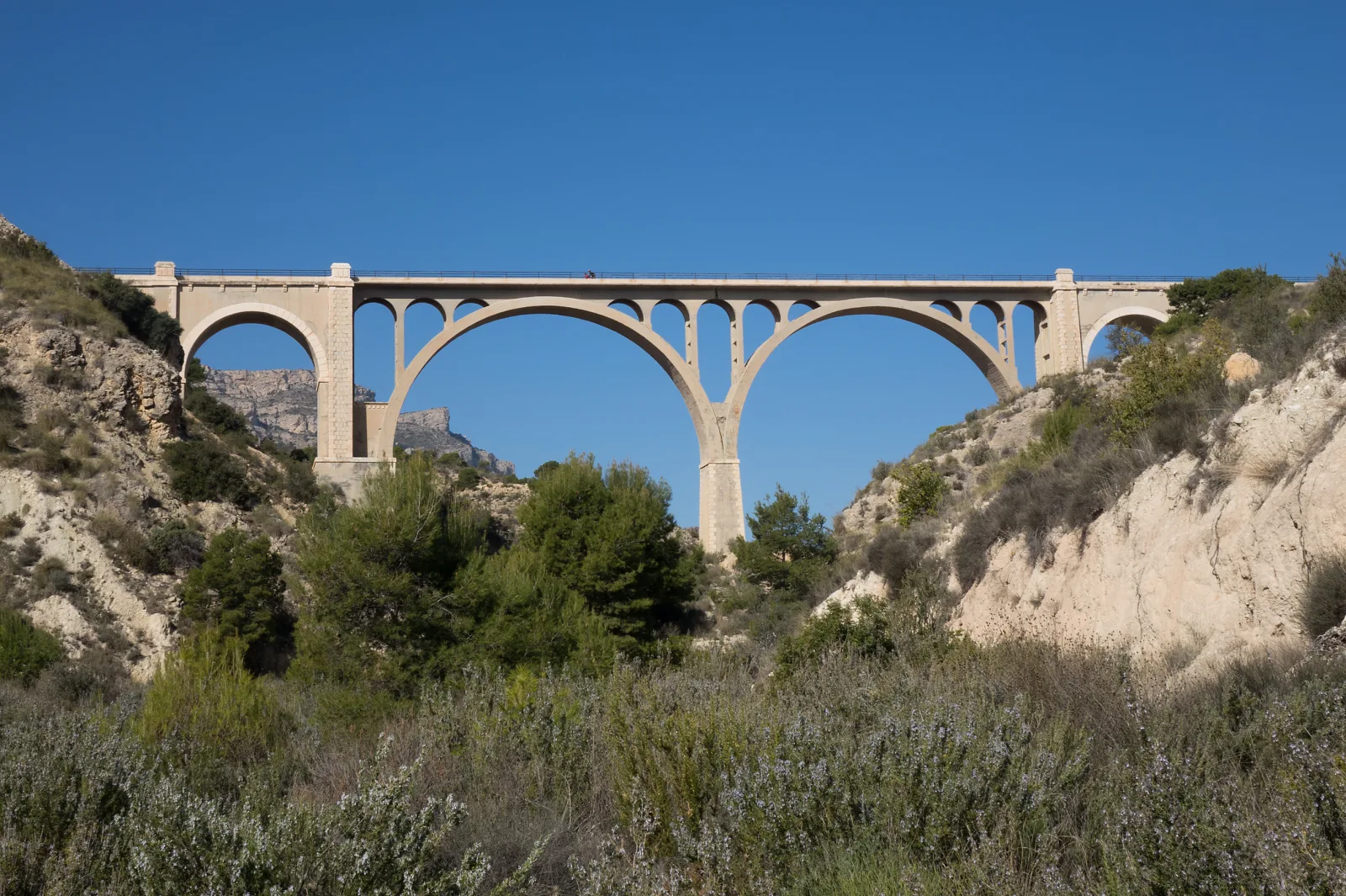
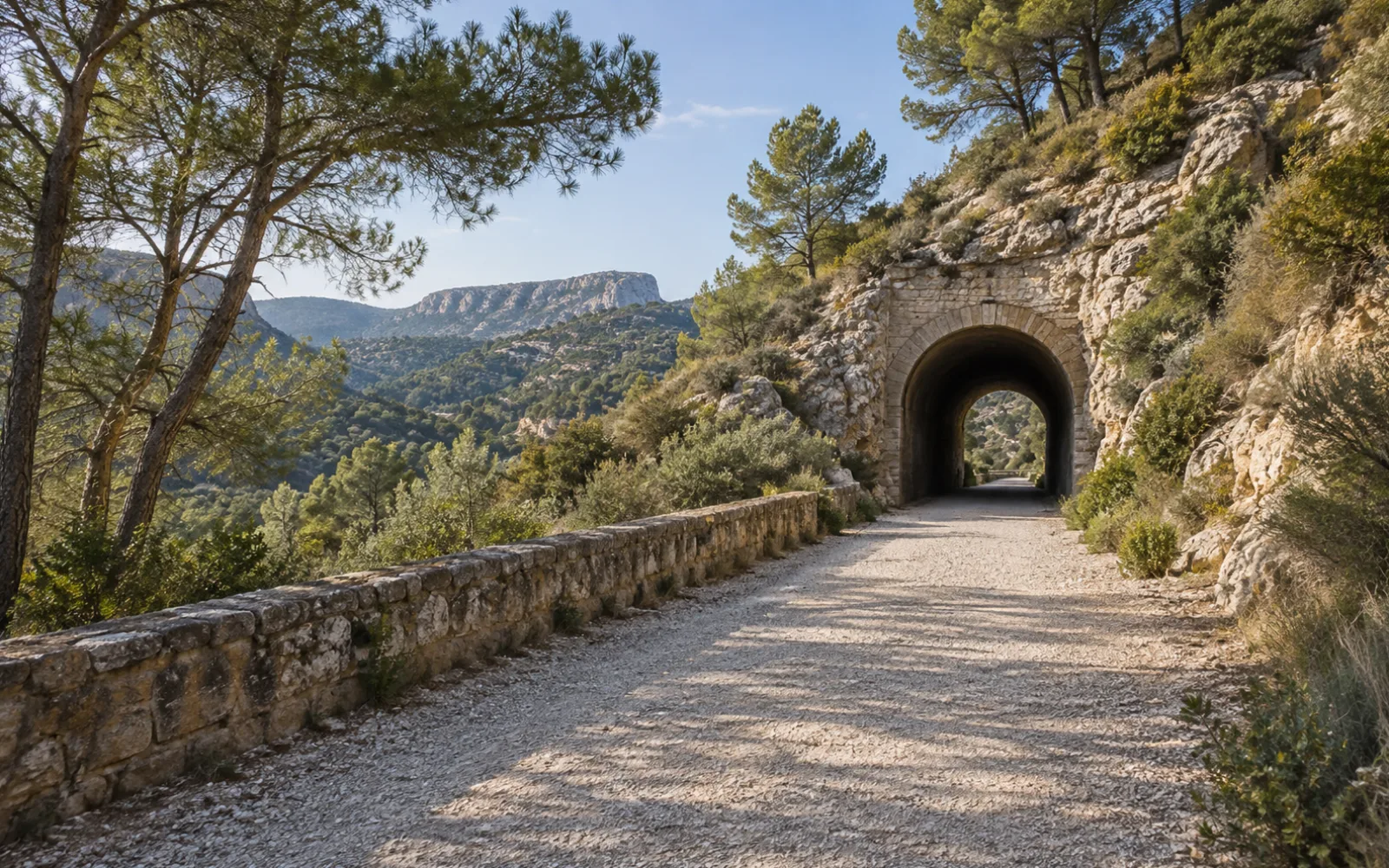
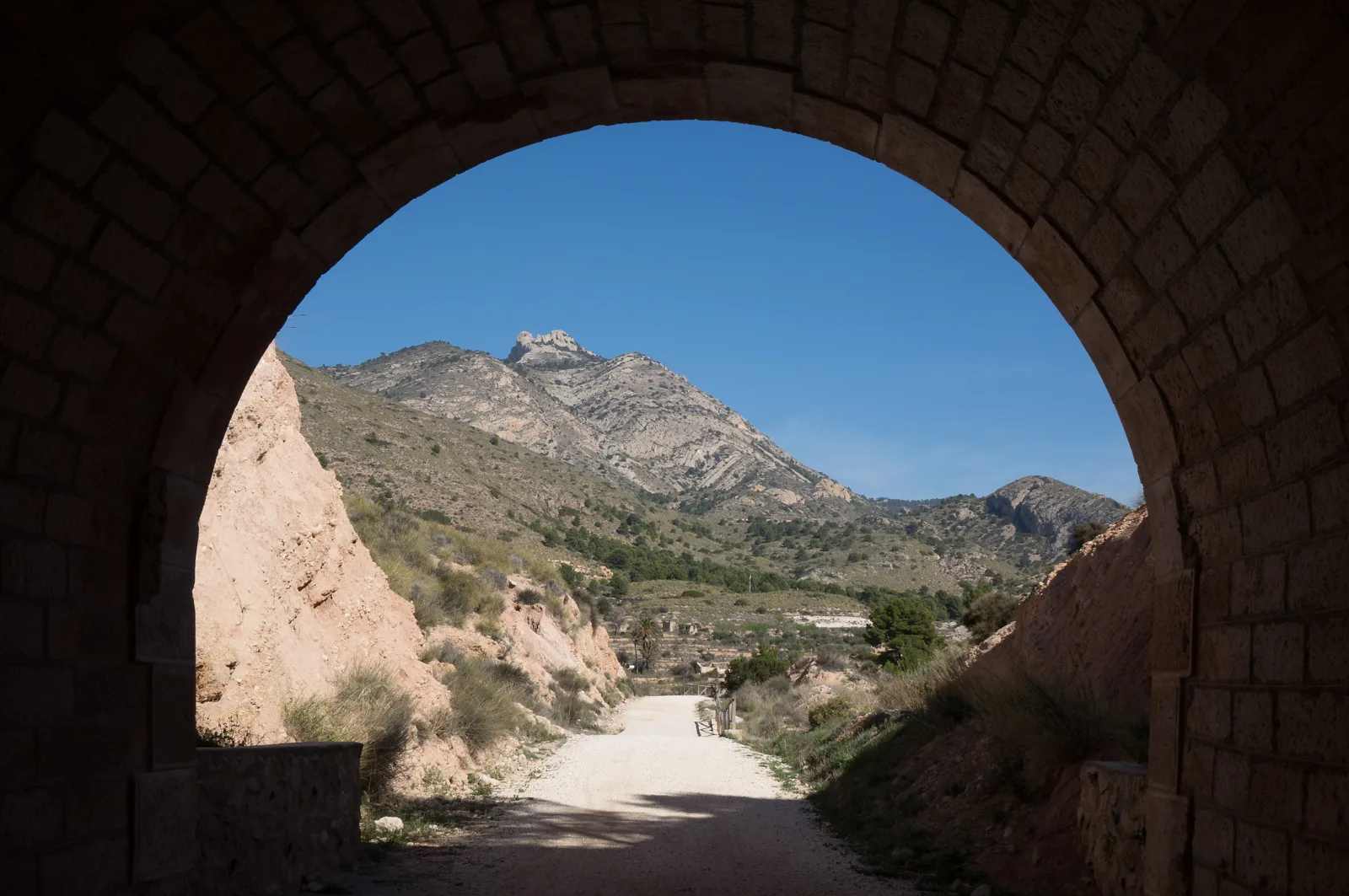
The Camino Natural Vía Verde del Maigmó follows an unfinished railway project between the old Agost halt and the Port del Maigmó area. The ministry warns about unlit tunnels and a section shared with motor traffic. Bring suitable lighting and check current conditions before visiting. An old station name does not establish that passenger trains serve it. Nor should you automatically extend the line on your map to Alcoy: every onward connection needs separate verification. Agost also provides a cultural stop at its pottery museum, provided opening arrangements and luggage storage fit your journey.
Resolve every connection and every overnight finish
For each day, record the start, finish, surface, accumulated climbing and alternatives, using official documents where available. Separate verified sections from connections still needing municipal advice or local knowledge. A walking trail does not become a cycling route because it appears nearby on a map, and a line across a property does not imply permission. If a connection cannot be confirmed, change the itinerary or arrange transport. Do not discover at dusk that the accommodation entrance sits beyond a difficult road junction. Its postal address may not identify the practical entrance for a loaded bicycle.
Sleeping, supplies and water are part of the route
Confirm arrival arrangements, bike storage and whether breakfast will be available before departure. For a rural house, ask about advance shopping and actual dinner options on your chosen day. Mark confirmed supply points without assuming every mapped fountain provides drinking water or every café will be open. Carry reserves appropriate to the stage and conditions rather than depending on one uncertain stop. When changing accommodation, check whether short stays are accepted. Sleeping in a village can simplify logistics compared with an isolated property that adds distance and climbing at the end of the day.
Plan the return with a loaded bike
A one-way route needs a plan for both the rider and the bicycle to return. Renfe distinguishes between services and packing arrangements, so check the exact train before purchasing. For other transport, state dimensions, bags and bike numbers and obtain explicit acceptance. Do not assume an ordinary taxi or bus will accommodate everything. Keep offline copies of the route and contacts, with enough power for navigation and lights. If renting, confirm one-way returns, opening times and charges before designing a finish that the rental agreement does not allow.
Lightweight travel can include beds and culture
Bikepacking does not require camping. Confirmed accommodation, reduced luggage and village visits can leave more time for conversation, meals and discovering the area. We do not claim a certified AlicanteResort route or guaranteed wild camping places. Check the rules of each area and use accommodation or explicitly permitted overnight locations. For time off the bike, include a visit in Agost, a town walk in Alcoy or a food experience confirmed beforehand. If seeking help, describe dates, preferred surfaces and support needs: a specific enquiry makes the resulting proposal easier to assess.
Choose luggage by function
Make a functional list: navigation, lighting, compatible repair items, clothing, food, water and necessary documents. Then check where everything goes and what must be reachable without removing all the bags. Protect items that need to stay dry and keep straps clear of wheels and controls. A local loaded test ride reveals problems before travelling. If craft shopping is part of the trip, reserve space or arrange delivery: adding volume halfway through a journey changes the practical arrangements as well.
Before your visit.
Is there one continuous route here ready to follow?
This guide does not present a certified continuous crossing. The linked greenways and rides are independent proposals. Before combining them, verify every connection, permitted access and compatibility with your bike and luggage.
Do I need a gravel bike?
That depends on the confirmed surfaces, gradients and load. A label cannot establish suitability. Describe the itinerary to a rental business or mechanic and test the loaded setup before committing to a journey with changing accommodation.
Can I arrange luggage transport or sleep outdoors?
Luggage transport exists only when an operator confirms your dates and stages. Overnighting outdoors depends on the rules and permissions of each location; we do not assume wild camping rights or provide invented overnight sites.
Check the official sources.
Before travelling, check current notices, access arrangements, reservations and programmes with these sources.
- MAPA · Camino Natural Vía Verde del Maigmó ↗
- Turisme Comunitat Valenciana · Vía Verde del Maigmó ↗
- Turisme Comunitat Valenciana · Guía de cicloturismo ↗
- Renfe · Bicicletas y equipaje ↗